3rd KIMed Network Partner Forum: A Review
News | 29.10.2026
Working Together to Develop Trustworthy AI Solutions for Medicine
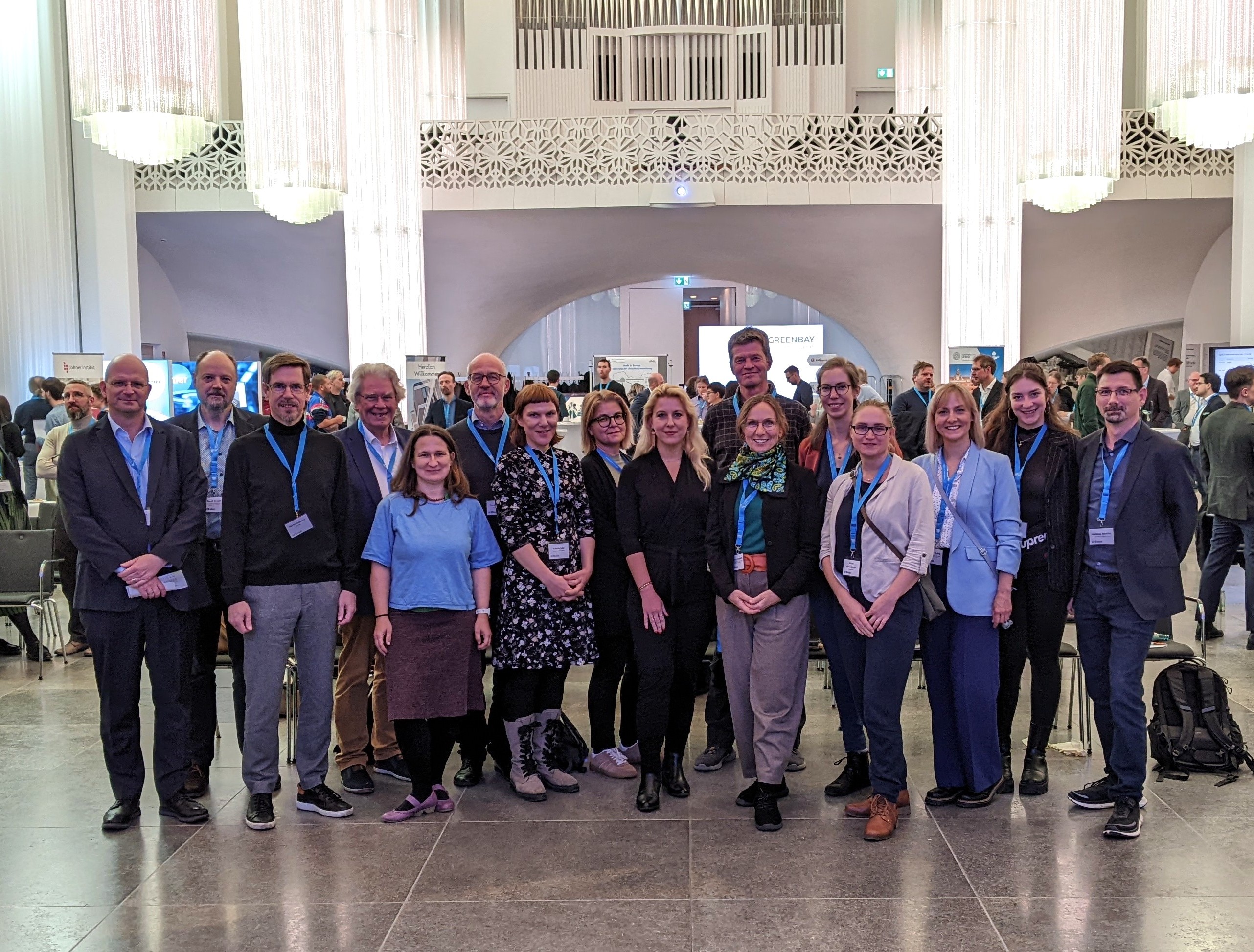
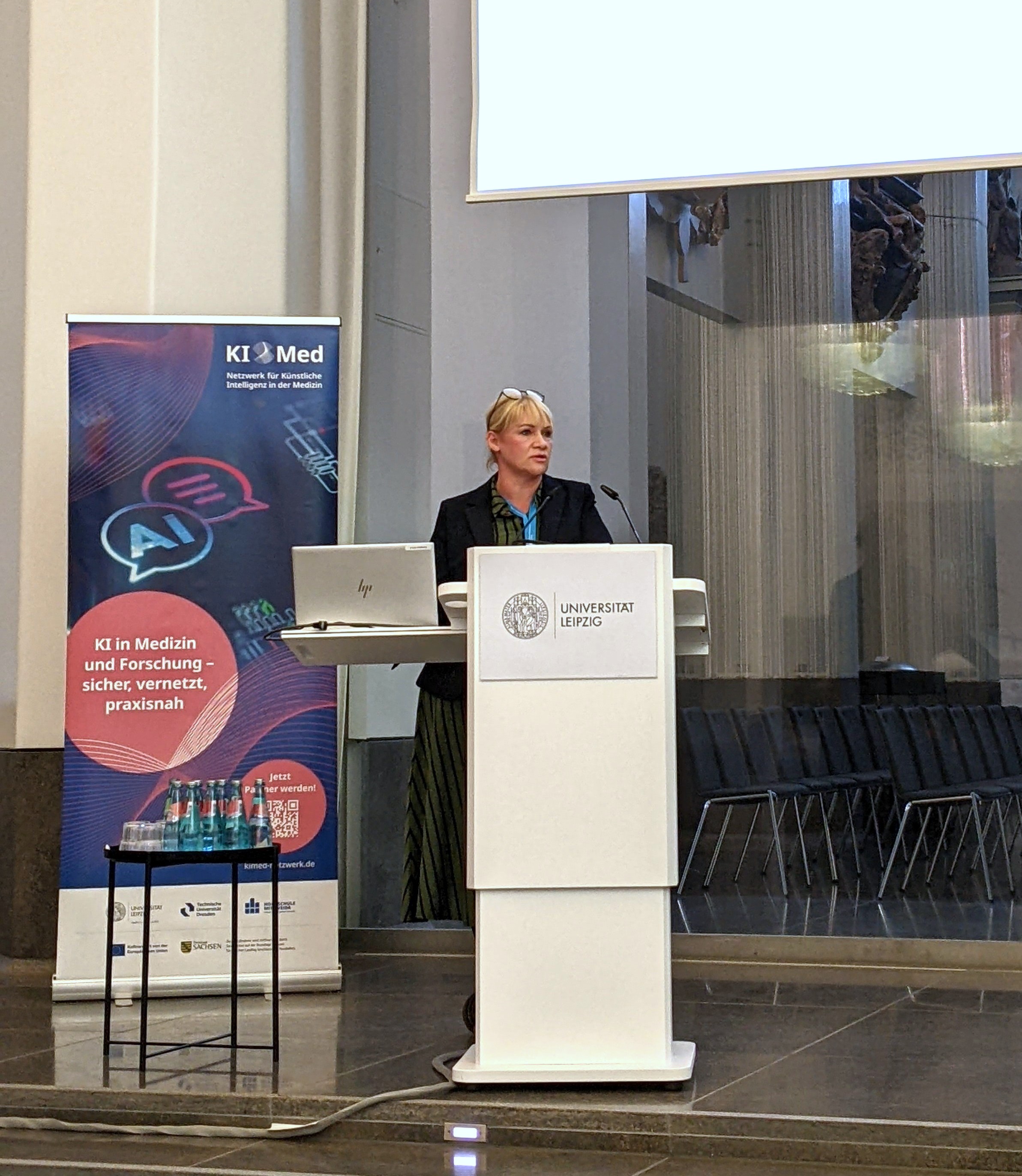
How can medical data be used securely for research and AI applications? And how can innovative solutions move from the lab into healthcare practice? Around 100 stakeholders from research, healthcare and industry came together at the KIMed Network Partner Forum at the Paulinum in Leipzig on 27 October 2026 to discuss these questions, learn about potential solutions and initiate new collaborations.
In their opening remarks, Prof. Dr. Thomas Neumuth (KIMed Principal Investigator, Leipzig) and Dr. Randy Kurz (City of Leipzig) set the tone for the day. “Trust determines whether people are willing to use AI as a tool to support them. This is exactly what we are addressing through KIMed and this Network Partner Forum,” Prof. Dr. Neumuth emphasised.
Dr. Randy Kurz highlighted the importance of exchange across sectors: “What matters is bringing research, industry and healthcare together to discuss the development of new technologies and to step outside our own bubbles.” The focus, he stressed, must be on the tangible benefits for patients.

Secure Data Environments as a Foundation for Medical AI
In line with the event motto, “Secure Solutions for Tomorrow’s Healthcare”, the first part of the forum focused on Secure Processing Environments (SPEs) and Trusted Research Environments (TREs). These protected environments enable the controlled processing of medical data, providing a foundation for health data research.
Prof. Dr. Toralf Kirsten (Leipzig University) presented the concept for an SPE for healthcare in Saxony, which is currently being developed as part of KIMed. As generative AI becomes increasingly important, the need for extensive datasets is also growing to train models and evaluate their performance. At the same time, strict requirements regarding data protection, data security and legal compliance must be met. The concept presented therefore relies on multiple layers of protection.
Dr. Philipp Breitfeld (University Medical Center Hamburg-Eppendorf, UKE) presented the UKE Data Hotel. It provides controlled access to the large volumes of clinical data generated during routine patient care. The platform is to be expanded in the future to include an open-source-based SPE for cross-site use.
Dr. Thomas Hiller (Berlin Institute of Health at Charité) presented MediCoRE, a national, cross-site SPE for health data research. The platform is being developed by bringing researchers and developers together from the outset to maximise its value for research.
Sascha Safenreider from Gesellschaft für Wissenschaftliche Datenverarbeitungen mbH Göttingen (GWDG) presented GöTRE, an SPE that is already in use. Among other things, it enables secure data sharing, audit logging and technical support for research projects.
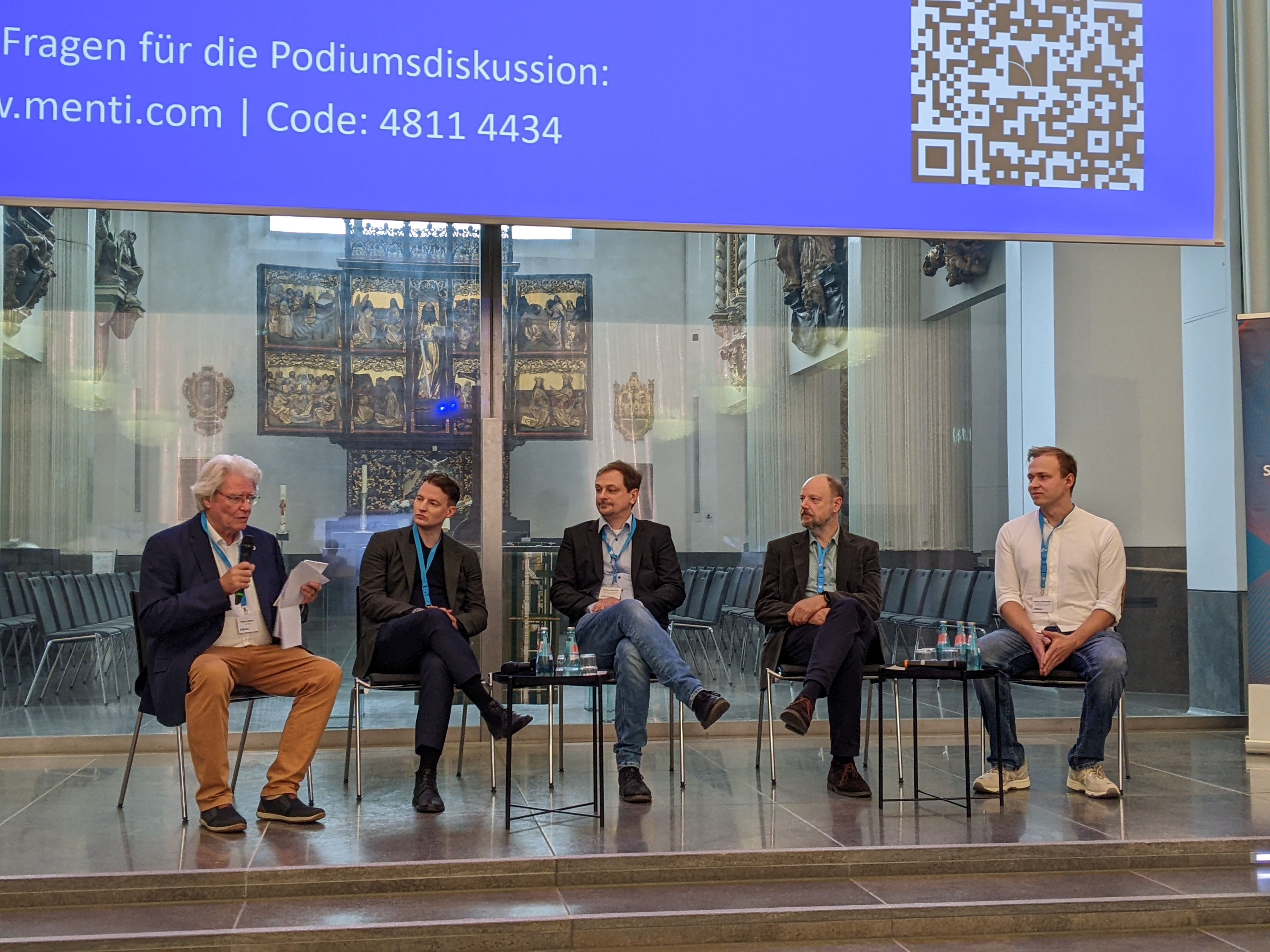
The subsequent panel discussion explored the different stages of development of these solutions, regulatory requirements, AI model training and cross-site data use. Potential applications in industry and the training needs of prospective users were also discussed.
Successfully Transferring Research into Practice
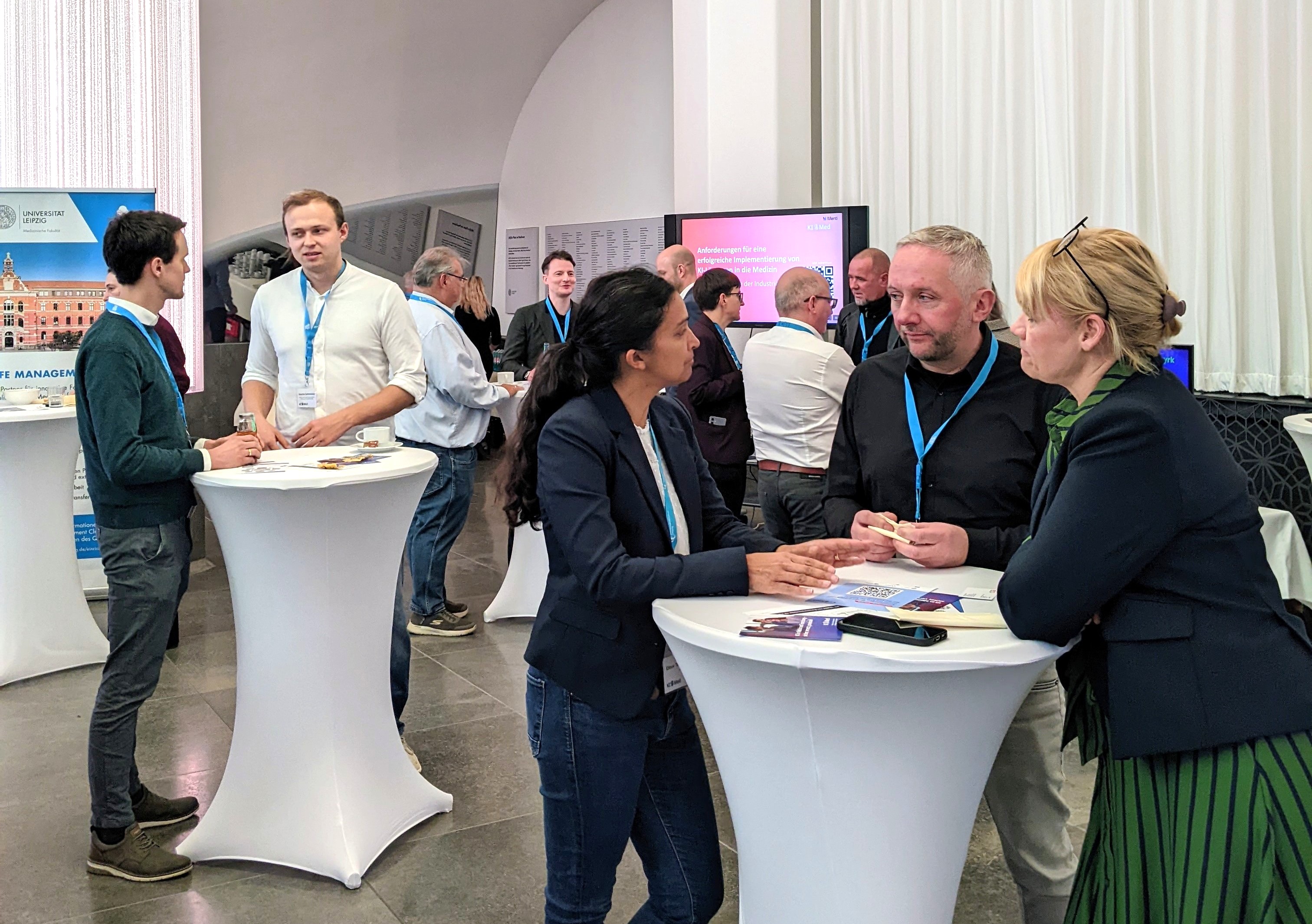
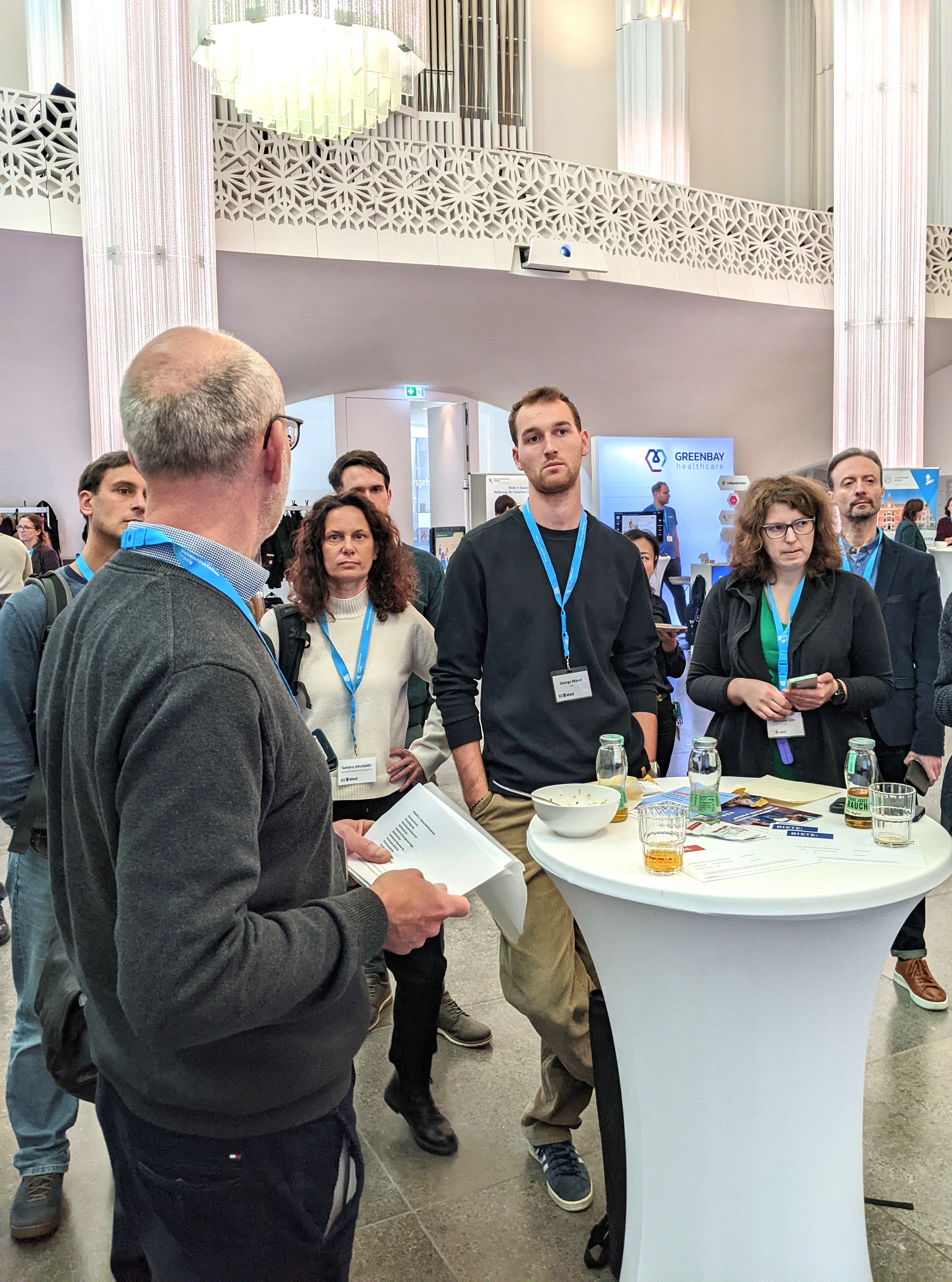
The lunch break provided an opportunity for informal networking and active participation. At interactive discussion boards, participants developed a set of requirements for the use of AI from the perspectives of research, healthcare and industry. The results showed that all three sectors face similar challenges. To address them, participants called for harmonised processes, nationwide access to infrastructure and improved data quality. From the healthcare perspective, automated medical histories and risk assessments were identified as potentially useful applications of AI. Participants also highlighted data protection, clinical evidence, standardised interfaces and political support for funding and advice as key prerequisites.
Dr. Robert Waschipky (Leipzig University Medical Centre, UKL) then provided insights into the practical use of AI at the hospital. Language models play a particularly important role in UKL’s AI strategy. Among other examples, he presented UKLGPT, an internal hospital AI tool; an information assistant based on 30 million documents from clinical information systems; and a language model piloted at the Department of Dermatology to make medical history-taking more efficient.
Dr. Anja Rösler (leap:up GmbH) demonstrated how scientific innovations can make their way into practical applications. Technology transfer does not begin only once a solution is complete. Medical needs, regulatory approval, funding and the path into healthcare practice are equally important. leap:up supports this process through various approaches to technology transfer. One of these is the “start-up without a founder” model, which enables innovations to be brought to market without requiring researchers themselves to establish a company. The key message: promising innovations should not remain confined to the lab.

Network Partners Showcase Their Expertise
The presentations by KIMed network partners highlighted the wide range of approaches to trustworthy AI and digital innovation.
Henriette Auerswald, Head of Regional Development at Gesundheitsregion Südwestsachsen, presented the organisation’s pilot project, which aims to bring innovative solutions into healthcare practice in response to demographic change and the shortage of skilled professionals. The network is looking for additional partners from IT, industry and research.
Representing the AMPEL platform at Leipzig University Medical Centre, Prof. Dr. Toralf Kirsten demonstrated how an open-source project can be integrated into clinical practice. The system enables real-time monitoring of information from patient records. Further researchers, developers and hospitals are being sought to support its continued development.
Dr. Christian Martin, research associate at the AI competence centre ScaDS.AI, presented its AI research activities in Leipzig and Dresden, as well as its training programmes and open-source resources. The centre is looking for partners with complex datasets and challenging research questions, including companies from the pharmaceutical industry.
Katja Peters, Key Account Manager at Bechtle GmbH, presented the company’s IT expertise and its approaches to developing secure AI solutions.
Jörg Nestler, CTO at Inotec FE GmbH, provided insights into the medical systems and electronic products for medical technology developed by Inotec.
Lars Eschenburg, Business Development MedTech at the MITCenter – Centre for Medical Innovation and Technology, presented the centre’s services for transferring healthcare innovations into clinical practice. These include identifying needs both within and outside hospitals, clinical validation at Leipzig University Medical Centre, training programmes, tutorials, an academy and access to experts.
Working Together to Advance Trustworthy AI
The Network Partner Forum made one thing clear: trustworthy AI in medicine requires secure data infrastructures, clear frameworks and solutions tailored to real-world needs. Above all, it requires collaboration between research, healthcare and industry.
The projects and services presented demonstrate that the network already brings together a wide range of expertise and approaches. The key challenge will be to connect these resources, address specific needs and establish sustainable pathways to practical application. The KIMed network provides a framework for strengthening this collaboration and jointly advancing trustworthy AI solutions for healthcare.
The next KIMed Network Partner Forum will take place in Dresden on 10 May 2027.